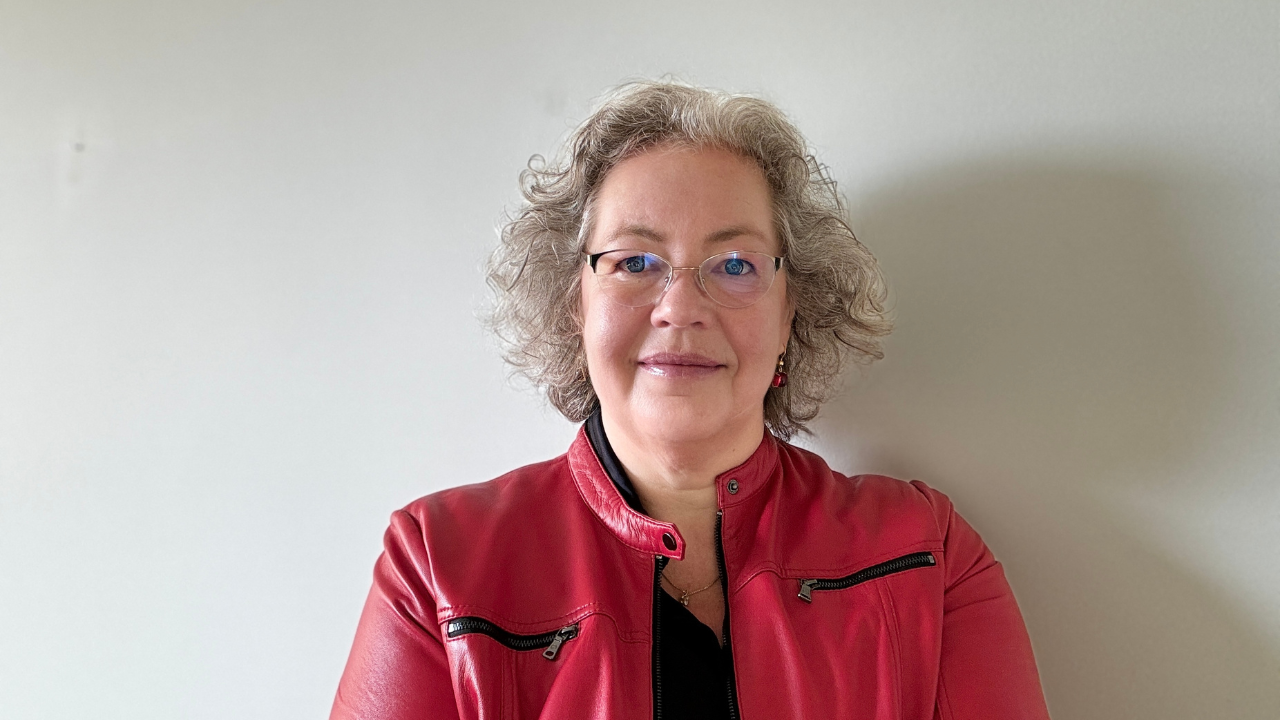
I am passionate about helping executives and organizations to integrate foresight.
In my personal life, for as long as I can remember, I wanted to know what would happen next. I think I'm stuck in the "And then what?" stage ;)
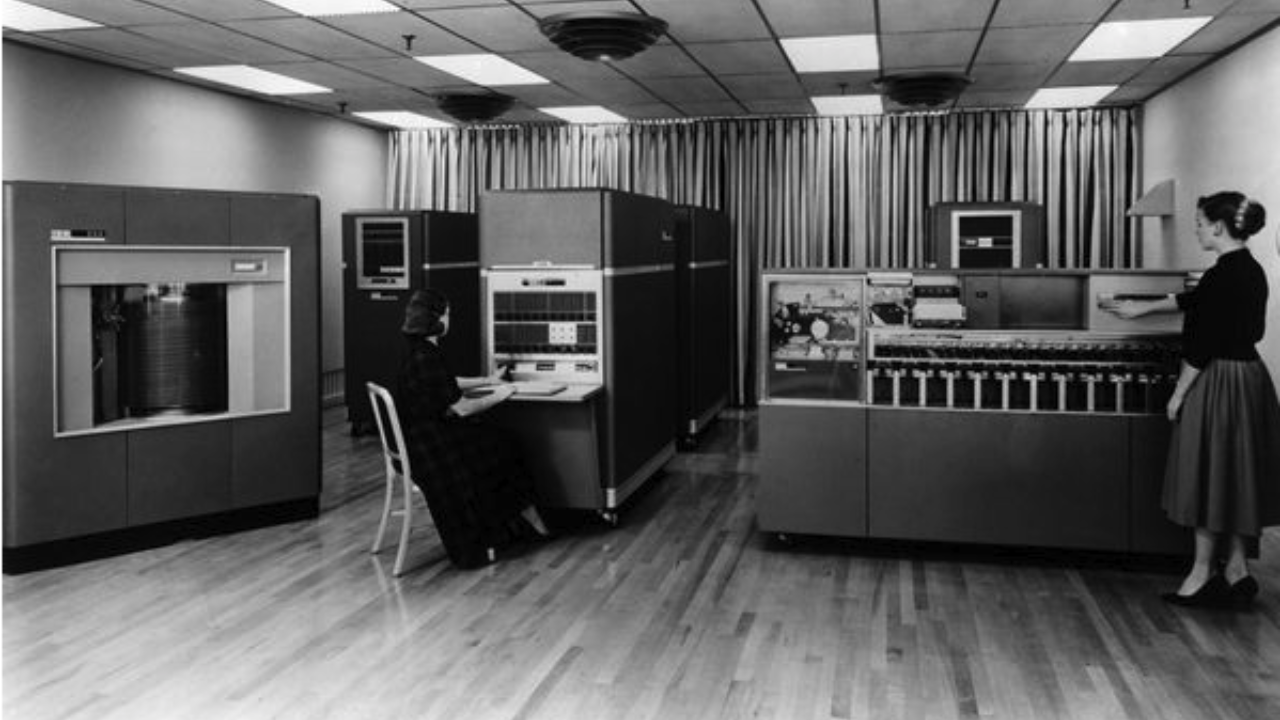
I blame my (much) older brothers, who took me to their lab in the 1970s to play tic-tac-toe with the university computer. It was as big as a house, rattled loudly, and spat out a little piece of paper that said: YOU WON. YOU CHEATED! This got me hooked on emerging technology from the age of 5.
And I blame my favorite uncle, who brought me stacks of science fiction books and a bag of fruit jellies to devour whenever he came around. He was a fixture in our household until I was around 12 years old. My young fascination for science fiction got me to sneak downstairs, hide in the hallway, and peek around the corner to watch a.o. Soylent Green when my parents thought I was sound asleep. I'll never forget that movie 😱...
So, no surprise that I am a future-oriented person. But why turn it into my livelihood?
In my work, I've seen firsthand how critical foresight is to the survival of organizations. It's no fun to watch people with kids and mortgages lose their jobs through misjudgment of strategic uncertainty and wicked problems. Ever since, I've wanted to learn and teach as much as I can to avoid this type of bankruptcy.
That's why I've made it my mission to help (aspiring) executives develop essential foresight competencies any way I can. I teach online courses, lecture on foresight for strategic decision-making under uncertainty at Nyenrode, and do a lot of applied research on wicked problems.
It also propelled me to do a Ph.D. in managerial foresight at Delft University of Technology and get training from the Harvard Business School in strategy and behavioral economics. I wanted to develop a deep understanding of the role of expertise in seeing what's next. It turned me into a specialist in the detection, interpretation, and usage of weak signals for understanding uncertainty and wicked problems. So, I regularly publish and review new papers on these topics to give my knowledge back to my peers.
I especially like to teach to (aspiring) executives because I have also seen its important waterbed effect in creating a better futures. I mean: when executives make better decisions, their organization does better, which means that its workers and suppliers do better, and in their turn, these people can help their families do better, who then have the means to help others.
I'm working to create that waterbed effect, where every executive learning to practice foresight well results in a brighter future for their organization and their stakeholders.
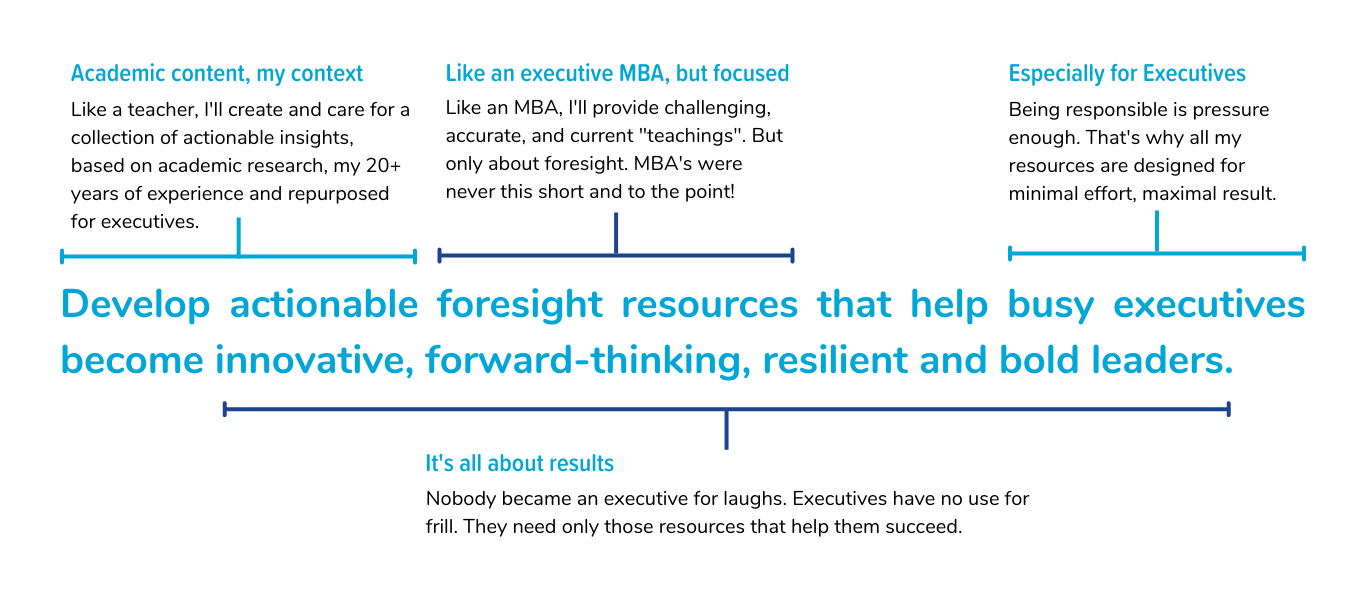
So that's why I am dedicated to strategic foresight, emerging technologies, and their roles in understanding uncertainty and wicked problems.
Fresh Foresight Insights Directly in Your Inbox
Join Barbara's mailing list to receive her latest Canary and updates about her research into managerial foresight and blind spots.
I hate SPAM too, so know that I won't spam or have others spam you!
